

With airlines committing to ambitious decarbonization targets and governments introducing SAF mandates, developers are under increasing pressure to move promising technologies from the laboratory to commercial production. Yet most failures occur not because the chemistry fails, but because scale-up risks are underestimated. Each scale-up stage introduces technical, operational, and financial challenges that must be managed. A structured scale-up approach reduces risk, builds confidence, and creates the foundation for a successful commercial deployment.
Success depends on proving the right elements at each stage and validating critical technology aspects before progressing. From laboratory experiments to commercial deployment, every step generates valuable knowledge that strengthens the business case and supports future investment.
From Lab to Pilot
The transition from laboratory development to pilot scale is where ideas begin to take shape as a real process plant. Now innovation becomes tangible. Developers can validate performance under realistic operating conditions while keeping investment low.
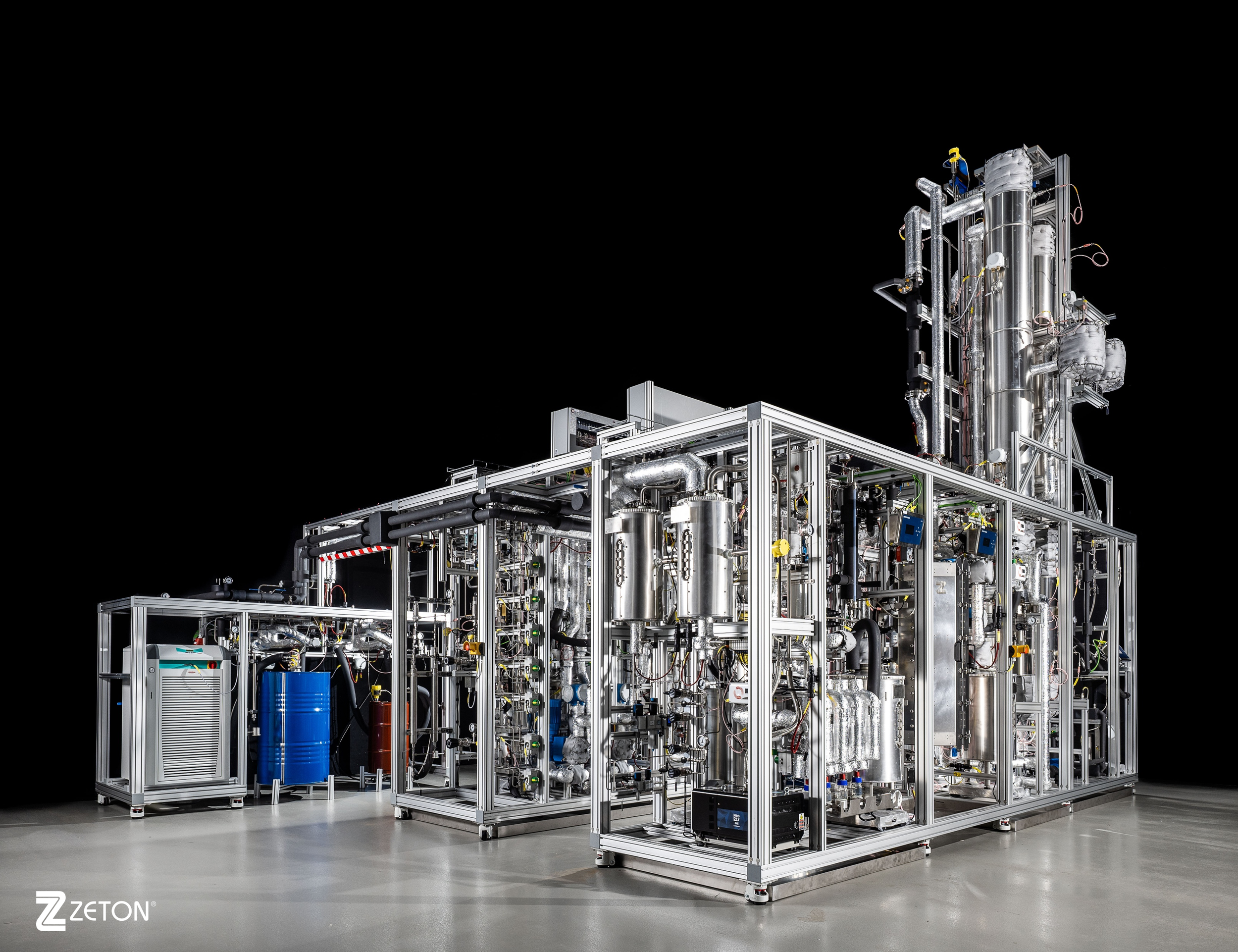
SAF pilot plant
Pilot plants provide a practical environment to test technology under challenging conditions. SAF technologies often operate across wide temperature and pressure ranges and require specialized materials. This requires scale-specific expertise in high-temperature/high-pressure design, special metallurgy, exotic alloys, and specialist sourcing. When combined with extensive experience across multiple SAF pathways and processes, it enables a first-time-right approach, minimizing risk and accelerating project execution.
Standard engineering solutions do not always provide the answers at this stage. This is particularly important when robust data on process performance, catalyst deactivation rates, and fouling risks is required. Custom-designed equipment and unique, out-of-the-box approaches are often required to overcome barriers and validate critical process elements. These solutions prove feasibility and positions the technology for advancement to the next scale.
Build Confidence Before You Build Big
Once pilot-scale operation has demonstrated technical viability, the focus shifts toward gathering the data needed for further scale-up. Pilot campaigns generate essential information on performance, operability, reliability, and product quality. This data forms the engineering basis for designing the next stage: the demonstration plant.
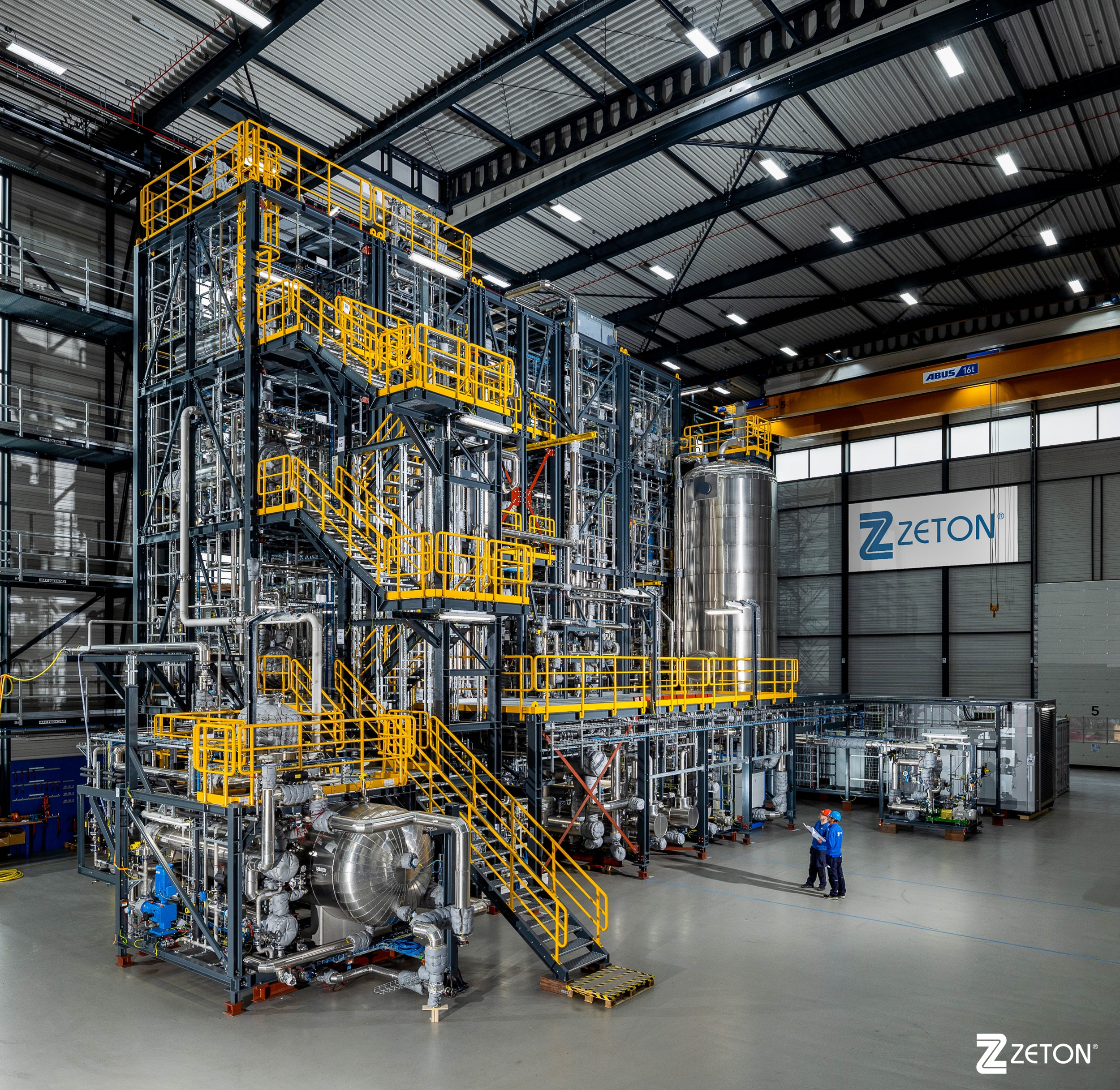
Innovative Biofuel Demo plant
A demonstration facility serves as the bridge between development and commercialisation. Its purpose is to produce the first meaningful quantities under conditions resembling future industrial production. To be successful in this phase demonstration scale expertise is crucial.
This scale occupies a unique position. It combines the flexibility of a smaller facility with the opportunity to gain experience under industrial operating conditions. It allows developers to validate commercial equipment, confirm process performance, and prove industrial solutions can successfully support the technology at larger scale.
Another important advantage of demonstration-scale facilities is flexibility. Multiple process configurations or
promising technology variants can still be evaluated, enabling operators to optimize the final design before committing to large-scale investments. Reducing technical uncertainty and validating commercial hardware, this phase improves confidence in future project execution.
Crossing the Scale-Up Valley of Death
For many SAF developers, the greatest challenge is not proving the technology, but securing the funding and partnerships needed to move from pilot to commercial scale. This "Scale-Up Valley of Death" is where many promising technologies stall.
Technical success alone is not enough. Investors, lenders and offtakers need confidence that the technology can operate reliably and economically at larger scale with minimised risk. Demonstrating long-term performance, generating high-quality process data, and building strong relationships across the value chain are essential.
A demonstration plant is essential for validating industrial scale performance, qualifying products, attracting investors, and de-risking project execution. When combined with a modular design approach, deployment can be accelerated, significantly shortening the commercialization and scale-up journey. Companies that successfully cross the Valley of Death combine technical validation with commercial partnerships, creating a clear path toward a bankable FOAK facility.
From Proven Process to Bankable Project
The ultimate objective is now coming into view: the First Of A Kind (FOAK) plant.
At this scale, the stakes increase dramatically. Capital investments rise enormously, and stakeholders expect a first-time-right result. Investors, lenders, and off-takers require confidence that the technology will perform as promised and generate reliable production over the long term.
The extensive work performed during pilot and demonstration phase becomes critical at this point. The operational insights, performance data, and engineering experience collected throughout the scale-up journey reduce uncertainty and support an accelerated, lower-risk deployment of the FOAK plant.
Risk can be further reduced through modular construction. Building large skid-mounted modules off-site improves quality control, shortens schedules, and minimizes construction risks. Equally important is comprehensive factory testing before transportation and installation. Verifying performance before equipment reaches site helps ensure a smoother startup and reduces commissioning challenges, enabling the plant to begin operations with greater confidence.
Assess Your Scale-Up Path
Every SAF technology follows its own commercialization route, but the principles of successful scale-up remain the same: systematically reduce risk, validate critical assumptions, and build confidence before committing significant capital.
A structured assessment of scale-up readiness can provide valuable insight into the maturity of a technology and identify the actions required to move to the next stage. Reviewing technical performance, operational experience, engineering challenges, and commercial requirements helps create a roadmap toward deployment.
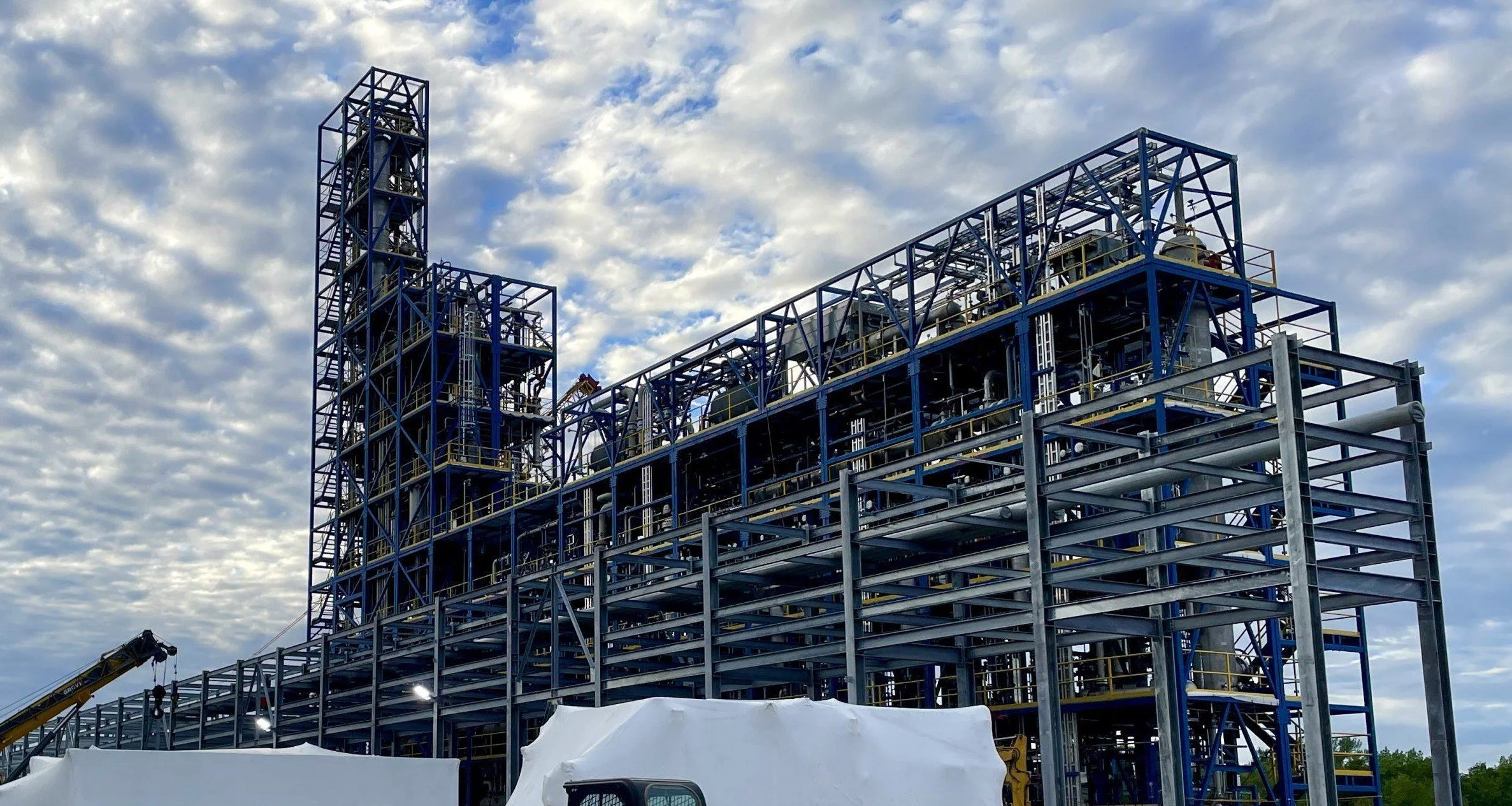
LanzaJet Freedom Pines Fuels SAF commercial-scale plant
In SAF commercialization, scale-up is not a single event but a sequence of risk-reduction decisions. Companies that systematically validate technology, operations, and commercial assumptions are far more likely to reach a bankable FOAK facility on time and on budget. A joint review of your scale-up and development
objectives helps to define the most effective path forward, ensuring that each stage of growth contributes to a successful, bankable commercial project.
Lessons Learned from Existing Scale-up developments
While every SAF scale-up program is unique, several challenges appear consistently across the industry. Start-up and commissioning activities often take longer than planned. Developers typically find that more operating data is needed to support design decisions and satisfy investors than expected. This additional time requires patience from investors, lenders, and developers. Successful projects recognize these realities early, allocate sufficient commissioning resources, and use pilot and demonstration facilities to identify and resolve issues before advancing to FOAK scale.