

Defining Asia Pacific’s SAF Landscape
In this 60 minute recorded webinar, our panel of experts explored the latest policy instruments and their impact in the APAC SAF market, where feedstock hubs are emerging, looking at the current HEFA market and opportunities beyond, and looking at what would they change in the industry.
From Incentives to Infrastructure: How state policy and the development of SAF hubs are shaping the NA SAF market
Over the course of an hour, a panel of experts explore how state-level incentives are shaping SAF project development, investment decisions, and regional competitiveness, the role of SAF hubs in connecting feedstocks, production, infrastructure, airports, and demand, what makes a state attractive for SAF producers, airlines, financiers, and technology partners, and more.
Carbon Accounting & Certification: From Environmental Claims to Commercial Value
In most commodity markets, value is driven by price, quality and availability. Sustainable fuel markets are changing that equation. Two fuel batches can have similar costs and performance yet generate very different commercial outcomes. The difference increasingly lies not in the fuel itself, but in the environmental attributes attached to it. Read on to learn more...
Brazil signs SAF mandate, adopts world's first policy-based book-and-claim system
Brazil’s new ProBioQAV decree sets rules for SAF certification, traceability and emissions-reduction compliance, while introducing the world’s first policy-based book-and-claim mechanism. Alongside new CCUS and hydrogen regulations, the framework strengthens Brazil’s position as a biofuels market and potential SAF production hub, with implications for logistics, attributes trading and aviation decarbonisation.
Delta, Shell expand SAF partnership at US hubs in five-year agreement
Delta Air Lines has signed a five-year agreement with Shell Aviation to expand sustainable aviation fuel supply across multiple US airports through 2030, building infrastructure to support consistent SAF delivery as the carrier advances decarbonization efforts, the airline said in a July 15 statement. Learn more about this, and the latest SAF pricing, inside.
Can North America Turn eSAF Potential into Commercial Scale?
North America has the renewable resources, industrial infrastructure and technology developers to become a major producer of efuels. eSAF will not replace bio-based SAF in the immediate market - HEFA, AtJ, gasification and more will all build meaningful North American supply. But efuels are becoming strategically important now, because the projects that could supply the early 2030s must reach key development, contracting and construction milestones much sooner.
Syntholene Technical Review Report
Syntholene’s geothermal-integrated hydrogen platform could offer a lower-electricity route to eSAF production, combining solid oxide electrolysis with heat recovery and dynamic stack operation. This report examines the technology’s efficiency potential, commercial differentiators, Húsavík demonstration progress, and remaining risks around electricity pricing, durability, and full-scale validation.
From Production Plant to Passenger Flight: German-Made e-SAF Enters Commercial Aviation
A KLM Cityhopper flight between Amsterdam and Hamburg has demonstrated that synthetic aviation fuel produced from renewable hydrogen and CO₂ can already be integrated into regular passenger operations. The flight also underlined the urgent need to move from technical readiness to industrial-scale production. Read on to learn more...
Partnering to Deliver Turnkey ETJ Projects
Today’s SAF producers have navigated that landscape to deliver a growing number of Final Investment Decisions, overwhelmingly utilizing the HEFA pathway via a mix of both revamp and grassroots projects. The next wave of project FIDs will likely be comprised of the “all of the above” SAF strategy including First-Of-A-Kind (FOAK) Alcohol-to-Jet (ATJ), biogas-to-fuels, and biomass gasification + Fischer-Tropsch (F-T) projects. Read on to learn more...
To have enough SAF in 2050, we must lay the groundwork now
The SAF transition will be defined by technologies that are yet to reach commercial maturity, but require investment and support today and in the decades to come to pick up the slack when current production methods can no longer meet the quantities needed. AtJ one of those production methods, but even it has it's challenges. Here's why Airbus sees it as a strong contender...
Why E-Fuels Matter Beyond Emissions Reduction
In this expert interview, Steven Gillard, Regional Sustainability Director for Europe and Middle East, Turkiye, Africa and Central Asia at Boeing, shares why eFuels are a critical tool in aviation's decarbonisation kit, and how new drivers around energy security might just be what the industry needs to innovate.
China’s SAF, Feedstock and eSAF Opportunity: From domestic scale-up to export growth
China’s SAF export opportunity is entering a new phase under the 15th Five-Year Plan. With green fuels, hydrogen, feedstocks and industrial decarbonisation moving higher up the agenda, China could become a major production and export hub for SAF and eSAF, but credibility, certification and traceability will determine its global role.
Announcing! The Winners of the Inaugural SAFTAs
The first-ever SAFTAs took place at the Sustainable Aviation Futures Congress, bringing the industry together for an evening dedicated to driving real progress in sustainable aviation. We are delighted to share this year’s winners! Congratulations to all of our winners, and to every finalist helping to move the industry forward.
Expert Insights from the World’s Largest SAF Event
Alongside the main congress programme, we took time with leading experts from across the SAF and aviation decarbonisation value chain for a series of focused insight interviews. Watch for expert reflections on what comes next for SAF, eSAF and aviation decarbonisation.
Technip Energies, Airbus, Safran form eSAF venture at Dunkirk
A consortium of industrial leaders has formed a joint venture to develop one of Europe's largest alcohol-to-jet facilities, aiming to help meet rapidly rising EU mandates and contribute to energy security. Learn more about this, and the latest SAF pricing, inside.
Technology Partnerships Can De-Risk a SAF Pathway with a Challenged Past
The consensus opinion of SAF experts is that one of the long-term SAF growth pillars will be the utilization of abundant, low-cost, waste biomass via the Gasification and Fischer-Tropsch (F-T) pathway. However, the history of that pathway is filled with the remains of unsuccessful commercialization attempts. Read on to learn how partnerships can overcome these challenges...
Brazil's SAF pathway: aligning mandates and market mechanisms
Brazil is positioning itself as a future global SAF hub through an emissions-based mandate focused on lifecycle carbon reductions rather than fixed blending targets. This article from ApexBrasil explores how Brazil’s flexible policy framework, combined with its government-backed CS-SAF book & claim system, could accelerate SAF market development, improve supply chain efficiency, and support global aviation decarbonisation efforts.
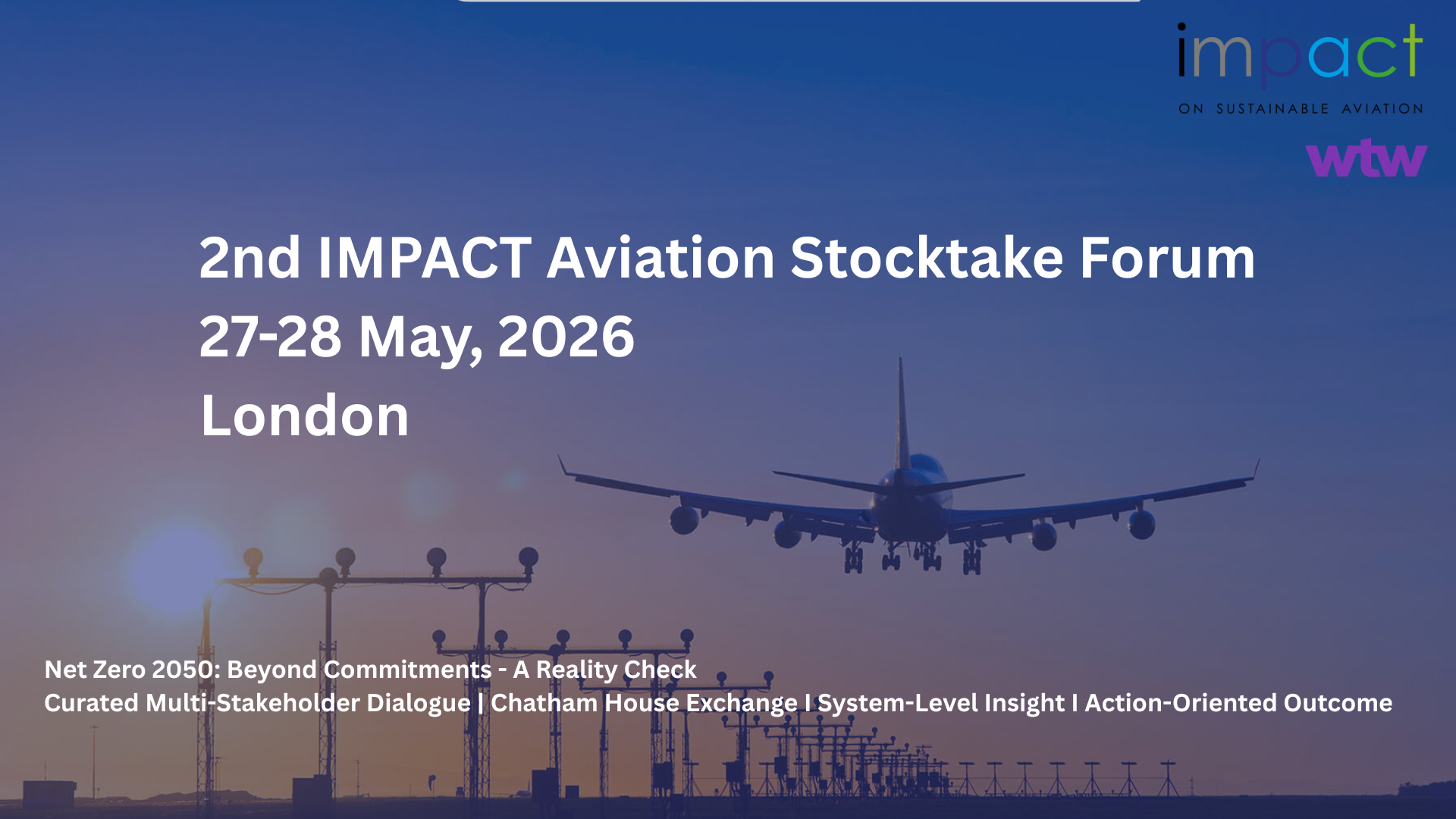
2nd IMPACT Aviation Stocktake Forum
Producers say sustainable aviation fuel production could enhance energy security by creating local feedstock sources, though divergent global incentives risk complicating project economics and investment decisions. Read on to learn more...
SAF production offers potential energy security boost: BP
Producers say sustainable aviation fuel production could enhance energy security by creating local feedstock sources, though divergent global incentives risk complicating project economics and investment decisions. Read on to learn more...

Meet the SAFTAs Finalists: The people moving the industry forward
In this edition of SAF Spotlight, we’re celebrating the individuals driving the industry forward. Read on to learn about a selection of the finalists in The Exceptional Woman in SAF Award, Decarbonisation Rising Star, and the Decarbonisation Leadership & Advocacy Award…