


COMPLIANCE, STRATEGY, SUPPLY CHAIN RESILIENCE AND OPPORTUNITIES

This course offers a comprehensive understanding of the EU ETS and UK ETS regulatory frameworks, covering their scope, design, and evolving legislative landscape. Participants will stay updated with current developments, including amendments under the Fit-for-55 package and changes in sectoral applicability, as well as a dedicated focus day on supply chain resilience linked to the ETS schemes.
The course also delves into the principles and practices of monitoring, reporting, and verification (MRV) in line with the Monitoring and Reporting Regulation (MRR). Crucially, it focuses on sustainable aviation fuels (SAF) and their role in decarbonising aviation. Participants will understand SAF treatment within the EU and UK ETS and compare SAF treatment under CORSIA versus the EU and UK ETS.
NEW SUPPLY CHAIN RESILIENCE DAY:
One of the key objectives of the Emissions Trading Schemes (ETS) in the EU and UK is the enhancement of supply chain resilience by driving investment in low-carbon technologies. The associated carbon price incentivises businesses to decarbonise operations and reduce reliance on high-carbon, potentially volatile, supply chain links.
The latest edition of the ETS, Carbon Markets and Sustainable Aviation Masterclass will also include a third day, deep-diving into the importance of supply chain resilience.
By the end of the course, attendees will be well-equipped to navigate the complexities of these frameworks and apply their knowledge to real-world environmental strategies.
Course Benefits
Comprehend the concept, purpose, and strategy behind emissions trading systems (e.g. EU and UK ETSs).
Navigate the EU ETS Directive, MRR, and relevant guidance documents and templates.
Identify and apply the applicability criteria, including sector-specific exemptions.
Recognise the specific obligations and responsibilities of aircraft operators under ETS.
Grasp the rules and principles governing the surrender of emissions allowances and understand SAF treatment within the EU and UK ETS and compare SAF treatment under CORSIA versus the EU and UK ETS.
Gain a solid foundation and introduction to supply chain resilience, and understand the different pathways of non-scalable and scalable resilience measures.
Course outline and schedule - Click a day below to see modules included
-
Module 1: Foundations of the EU & UK ETS
Define an Emissions Trading Scheme (ETS) and explain its functioning
Explore historical evolution of the EU and UK ETS
Examine EUA & UKA pricing, allocation, and trading mechanisms
Identify key stakeholders and their compliance obligations
Review recent policy developments (e.g. Fit-for-55 package)
Module 2: Market dynamics of the EU & UK ETS
Compare sectoral coverage and key differences between EU ETS and UK ETS
Analyse economic factors influencing EU and UK ETS markets
Examine relevant energy market trends and their implications
Assess geopolitical influences on market stability and prices
Discuss significant policy developments and anticipated changes
Case study: EU-UK ETS linkage
-
Module 3: Monitoring, Reporting and Verification (MRV) in ETS and CORSIA
Define Monitoring, Reporting and Verification (MRV) principles in the context of ETS and CORSIA
Describe applicability criteria for operators, installations and aviation
Outline key monitoring and reporting requirements under the Monitoring and
Reporting Regulation (MRR)
Identify thresholds, exemptions, and compliance procedures
Explain the verification process
Highlight changes and updates under recent ETS reforms and proposals
Module 4: Integrating Sustainable Aviation Fuels (SAF) into EU & UK ETS and understanding CORSIA
Introduce Sustainable Aviation Fuels (SAF) and their role in decarbonising aviation
Explain the integration of SAF within the EU and UK ETS frameworks
Compare treatment of SAF under the EU & UK ETS vs CORSIA
Discuss regulatory and compliance requirements for airlines using SAF
Examine challenges and opportunities in SAF deployment
Case studies
-
Module 5: Introduction to Supply Chain Resilience
Providing an introduction and overview to supply chain resilience.
Detailing business relationships in the supply chain.
Evaluating business relationships in the context of sustainability.
Understanding and measuring the sustainability criteria, risks and benefits.
Module 6: Supply Chain Interventions
Introduction to the sustainable impact design
Scalable and non-scalable resilience measures
The roles of efficiency projects, compensation plans, deployment of new technology, and innovation
Break-out session and review of the schematic learnings
Module 7: Supply Chain Collaboration
Outlining the challenges of scalable and non-scalable resilience measures.
Organizing collaboration, what high-performance teams have in common.
Creating an operational safe space for supply chain collaboration.
Break-out sessions
Reviewing the schematic learnings
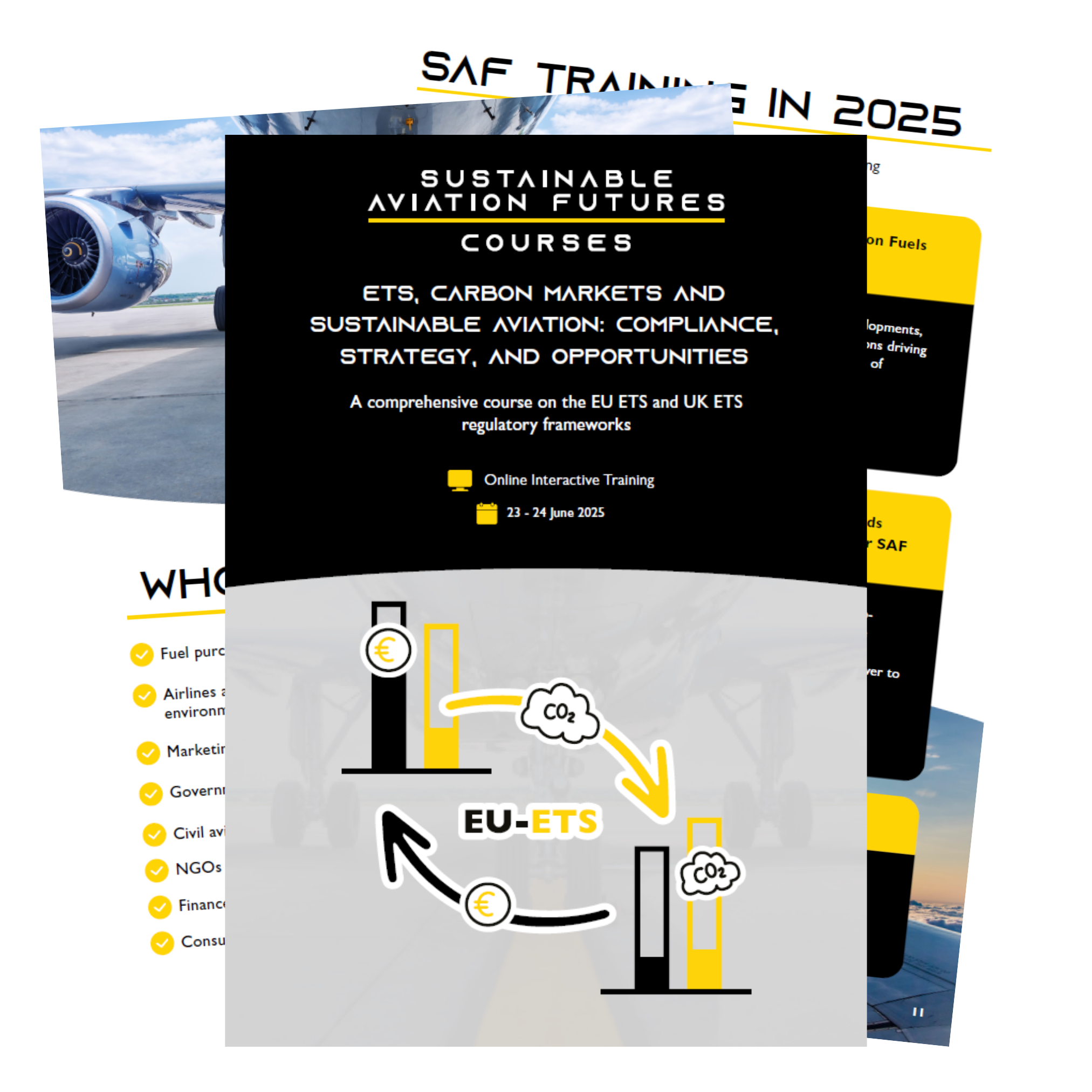
Download the brochure to see…
A complete breakdown of key topics within the agenda
Detailed information on each expert trainer
The benefits of attending this online interactive course
A full overview of the sessions taking place each day
Information on how to book your place and what’s included
Meet the Trainers

Tom Lord
Head of Trading and Risk Management
Redshaw Advisors
Tom is Head of Trading and Risk Management at Redshaw Advisors. Previously, Tom was at Barclays Capital for 8 years specialising in emissions trading, commodity confirmations, settlements and logistics. He was promoted to Head of the Emissions Trading desk in 2014 and was responsible for the execution and pricing of client trades and structured deals. Since joining Redshaw Advisors,
Tom has gained a deep knowledge and understanding of customer’s requirements in global carbon markets (both compliance and voluntary). Tom has extensive knowledge of global carbon emissions markets. He has advised the UK, South Korean and Serbian governments as well as the European Commission on carbon market design with a particular focus on liquidity.
Dr. Marc Goedkoop
Founder
Pure Carbon Blue
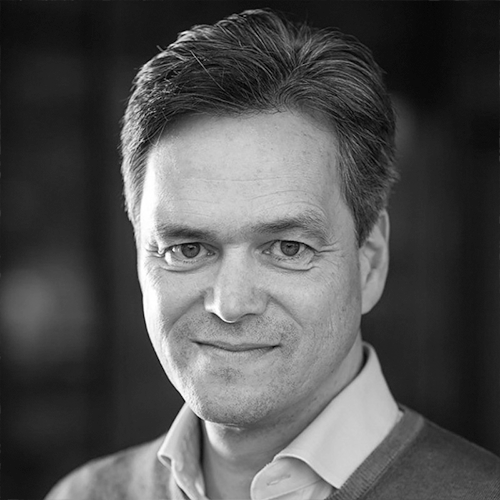
Marc is the founder of Pure Carbon Blue, a Dutch company pioneering the capture of carbon from water to create bio-carbon feedstock for industrial use. As a teenager and son of a captain he learned how fuel savings can be achieved in commercial aviation. Since beginning his career in the mid-1990s, Marc has been deeply engaged in cost efficient and sustainable product design within heavy industry. At Tata Steel, he instigated a new steel grade for the automotive sector. Later, at ArcelorMittal, he built the commercial foundation of the company’s tubular steel products division for the automotive and construction market sectors. In his work supply chain collaboration always played a key role and was awarded by leading European and Japanese car manufacturers.
Interested in speaking to a member of our team before booking your place?
Contact us directly below, or alternatively, complete this short form with your enquiry and we will be in touch to answer your questions:
Contact:
Nick Cassidy
Client Services Manager
E: Nick.Cassidy@safcongress.com
T: +44 (0) 20 3355 4230