



Register for the SAF Mini-MBA to understand the opportunities and challenges presented by sustainable aviation fuels. Led by three leading aviation, biofuels and energy experts, this three day (10+ hours) course will equip you with an in-depth understanding of the approved and emerging production pathways for SAF, feedstocks required for their production, and the global policies driving scale up of the industry.
DAY 1
Understanding Jet Fuel and SAF Production Pathways
Analysing Approved SAF Production Pathways
Defining Emerging SAF Pathways (PtL and eFuels, Hydrothermal Gasification and Wet Waste-to-Jet)
Detailing Fuel Blending, Conforming and Compliance Requirements
DAY 2
SAF Feedstock Technologies, Supply Chain and Carbon Accounting
Providing an Overview of Feedstock Types, Technologies and Characteristics
Assessing Feedstock Availability, Readiness and Emerging Feedstocks
Highlighting the Importance of Sustainability, Criteria, Carbon Intensity and Verification
DAY 3
An Overview of Regional and Global Policy Mandates and Incentives for SAF
Global - CORSIA
EU – ReFuelEU and UK ETS
USA and Canada – IRA and LCFA
Rest of World
Establishing Supply Chain Resilience for SAF
Sharing Strategies to Execute Supply Chain Resilience
Reducing Carbon Footprint for SAF Logistics
-
BOOK NOW TO SECURE YOUR PLACE
All course times are listed in Central European Time
Brand New for 2025!
Gain in-depth market knowledge of SAF production pathways, policies, feedstocks & supply chain
Register for the SAF Mini-MBA to understand the opportunities and challenges presented by sustainable aviation fuels. Led by two leading aviation, biofuels and energy experts, this three day (10+ hours) course will equip you with an in-depth understanding of the approved and emerging production pathways for SAF, feedstocks required for their production, and the global policies driving scale up of the industry.
Key Course Benefits:
Understand the approved production pathways available for SAF
Evaluate the supply chain, opportunity and limitations of SAF feedstock availability worldwide
Get an in-depth overview of the policies and mandates driving SAF scale up worldwide
Understand the different types of feedstocks that can be used for SAF production, including feedstock characteristics, quality and challenges
Determine feedstock readiness and maturity of supply chains to support SAF production
Understand the critical need for sustainable feedstocks, determining the carbon intensity and sustainability verification
Establish effective practices for book and claim carbon accounting and reporting, including the consideration of Scope 1 and 3 emissions
Understand the importance of supply chain resilience for SAF production and logistics
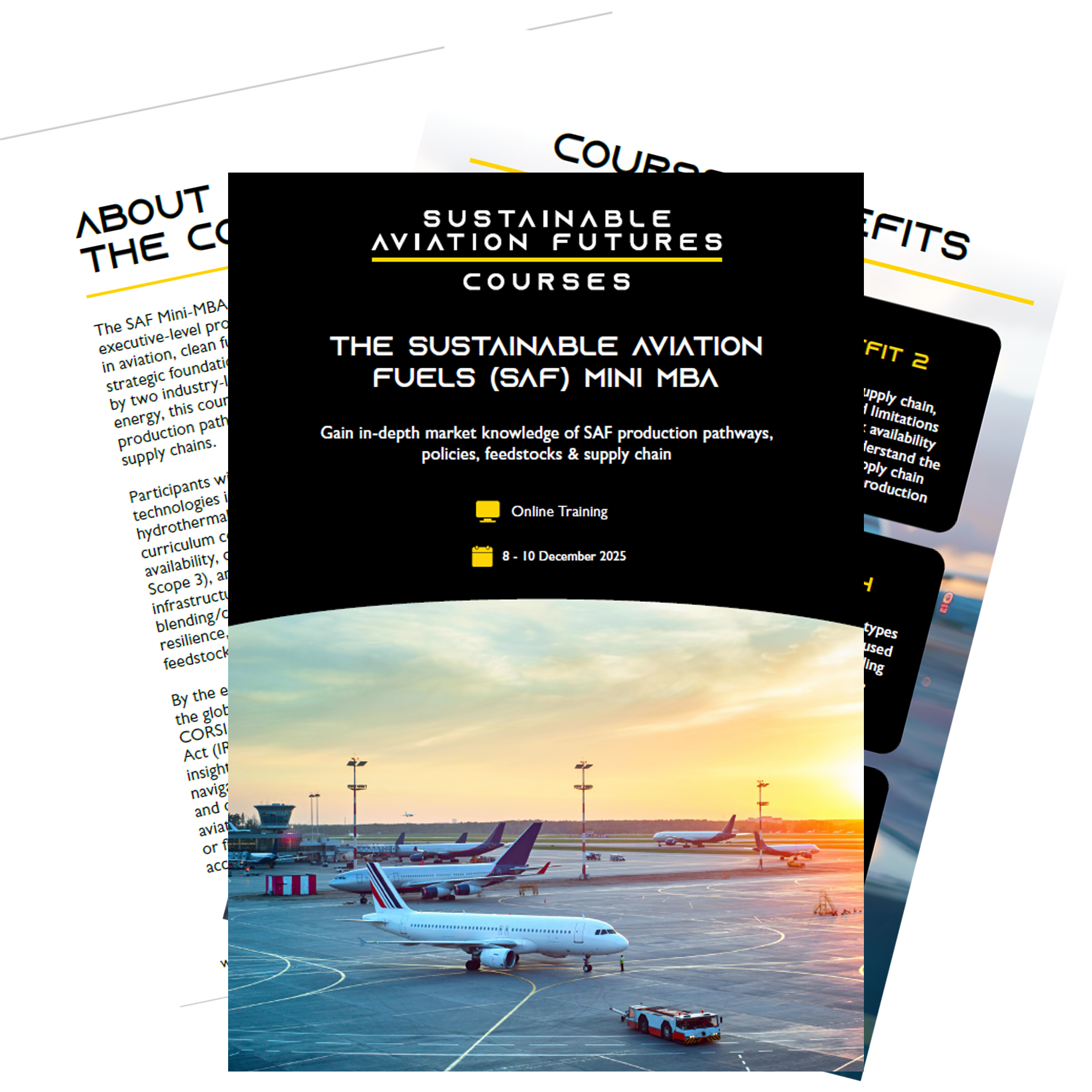
Download the brochure to see…
A complete breakdown of key topics within the agenda
Detailed information on each expert trainer
The benefits of attending this online interactive course
A full overview of the sessions taking place each day
Information on how to book your place and what’s included
CLICK HERE TO DOWNLOAD BROCHURE
Course outline and schedule
DAY 1
Understanding Jet Fuel and SAF Production Pathways
Analysing Approved SAF Production Pathways
Defining Emerging SAF Pathways (PtL and eFuels, Hydrothermal Gasification and Wet Waste-to-Jet)
Identify the difference between Fischer-Tropsch, HEFA, and alcohol-to-jet processes
Providing an overview of LCAF and co-processing and their role in SAF and aviation fuel
Detailing Fuel Blending, Conforming and Compliance Requirements
Understand the blending limits (from 10-50%), and reasons, for the eight approved technical pathways for SAF production
Understanding why SAF is a drop-in fuel and the pathway to 100% SAF
DAY 2
SAF Feedstock Technologies, Supply Chain and Carbon Accounting
Understanding various feedstocks for SAF production based on technology and characteristics
Analysing the feedstock types for SAF production, including oils, fats, lignocellulose, sugars, and CO2.
Detailing each feedstock’s unique characteristics requiring different processing and optimization, including HEFA-SPK, FT-SPK, and biochemical pathway
Determining feedstock availability and cost to ensure commercial viability
Assessing the global and regional availability of feedstocks, including limitations and competition with other applications
Understand the critical need for mature supply chains to support SAF production
Unpacking upstream and downstream supply chains, from feedstocks to airports
Assessing supply chain risks and factors in establishing resilient supply chains for SAF pathways
Understand the carbon intensity and sustainability of feedstocks for SAF based on the latest CORSIA documents (June 2025)
Unpack the CORSIA default values and LCA methodology to understand aspects such as low ILUC feedstocks, marginal land, wastes, etc.
DAY 3
An Overview of Regional and Global Policy Mandates and Incentives for SAF
Gain an in-depth understanding of the global policies being implemented in different countries to drive SAF scale up and usage
Analyse in-depth the policies in the US and EU, such as the Inflation Reduction Act, ReFuelEU Aviation, and the fundamental differences in approaches used
Gain an in-depth understanding of major SAF policies in the UK, British Columbia, and new SAF policy developments across the world in Brazil, India, Japan, Singapore, Malaysia, Australia and others
Benchmark the EU mandated SAF blends in aviation fuel and the role of the ETS in SAF production
Analyse the European Commission’s STIP announcement and its potential impact on eFuels
Understand different policy approaches to feedstocks and compare with CORSIA
Discuss the differences in policy and regulatory environments with respect to sustainability and life cycle assessment and how they interact with CORSIA
Providing an overview of financing mechanisms for SAF and the scale up required from pilot to commercial phase for projects
Interested in speaking to a member of our team before booking your place?
Contact us directly below, or alternatively, complete this short form with your enquiry and we will be in touch to answer your questions:
Contact:
Nick Cassidy
Client Services Manager
E: Nick.Cassidy@safcongress.com
T: +44 (0) 20 4591 1937